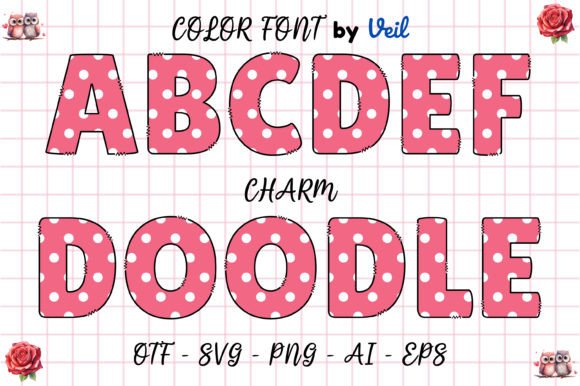
Charm: A Playful Font for Creative & Commercial Projects
There's a certain magic that happens when the right font meets the right project. It's that moment when a child's birthday invitation feels genuinely joyful, or a small-batch jam label looks both homemade and professional. This is where a typeface like Charm comes into play. It’s not just a set of letters; it’s a tool for injecting personality, warmth, and a touch of artistic flair into your work. If you're a designer, entrepreneur, or content creator looking to connect with an audience through visual storytelling, understanding how to use a font with this kind of character is essential.
Understanding the Visual Appeal of a Handwritten Style
Charm belongs to the family of handwritten fonts, but it distinguishes itself with a balanced, legible style that avoids the chaotic look some script fonts can have. Its appeal lies in its organic, human touch. Each letterform feels like it was carefully crafted by hand, with subtle variations in stroke and a gentle, flowing rhythm. This gives it an authentic, approachable quality that's hard to achieve with rigid, geometric typefaces. It bridges the gap between the casual feel of a script font and the reliability of a display font, making it a versatile premium font choice for projects that need to feel personal yet polished.
Think about the visual language of a cozy café, a boutique skincare line, or a popular lifestyle blog. They often use typography that feels curated and human. Charm fits perfectly into this space. Its modern typography sensibility means it doesn't look dated or overly whimsical. Instead, it offers a fresh take on a classic handwritten style, suitable for both digital and print applications where a creative font is needed to stand out.
From Brand Identity to Packaging: Where Charm Shines
The true test of any commercial font is its real-world application. A font might look beautiful on a specimen sheet, but how does it perform across different mediums? Charm's strength is its adaptability. It's a workhorse for projects that require a consistent and engaging brand identity.
For logo design, Charm can be a fantastic choice for brands in the wellness, creative, food, or children's product industries. It immediately communicates friendliness and creativity. Pair it with a clean sans serif font for body text to create a balanced and professional look. This combination ensures your branding is both distinctive and readable.
In packaging design, this typeface helps products jump off the shelf. Imagine it on a artisan chocolate box, a hand-poured candle, or a line of organic teas. It suggests care, quality, and a story behind the product. For editorial design, such as magazines or lookbooks, Charm can be used for pull quotes, section headers, or feature titles to add a layer of visual interest and break up dense blocks of text.
Practical Advice for Implementing a Characterful Font
Choosing the right font is only half the battle. Using it effectively is what separates good design from great design. Here’s how to integrate a font like Charm into your projects with confidence.
- Test Your Font Pairings: Never use a display or handwritten font in isolation. Always pair it with a highly legible font for longer text. A classic combination is a serif font or a sans serif font with Charm. For example, use Charm for a headline and a clean sans serif like Montserrat or Lato for the paragraph text. This creates hierarchy and ensures your message is clear.
- Prioritize Readability: While Charm is designed to be legible, context matters. Avoid using it for very small body text on screens or in dense printed documents. It performs best at medium to large sizes for headings, logos, and short phrases. Always test your designs at the intended final size, whether it's on a mobile screen or a printed poster.
- Leverage Included Styles: Many premium fonts come with multiple weights or stylistic alternates. Check if Charm includes a regular and bold weight, or perhaps different versions of certain letters. Using these variations can add depth and nuance to your designs, allowing for more dynamic font pairing within the same typeface family.
- Understand Licensing: Before using any commercial font in a client project or on merchandise for sale, carefully review the license. A desktop license typically covers creating logos, print materials, and images. If you plan to use it on a website via @font-face or in a mobile app, you may need a web or app license. This is a crucial step in professional practice to avoid legal issues down the line.
Elevating Your Creative and Marketing Assets
Beyond logos and packaging, a font like Charm can become a secret weapon for your marketing assets and digital products. On social media graphics, it can make your Instagram quotes, Facebook ads, or Pinterest pins feel more personal and engaging, helping to stop the scroll. For bloggers, using it for post titles or featured images can strengthen your visual brand and make your content more recognizable.
For small business owners creating their own materials, Charm offers a way to achieve a professional, custom look without the cost of a bespoke typeface. It can be used on everything from email newsletters and PDF guides to thank-you cards and product hang tags. For crafters and hobbyists, it’s perfect for creating unique invitations, greeting cards, scrapbook elements, and personalized prints.
The key is consistency. By using Charm strategically across your touchpoints—your website headers, your social media profile graphics, your invoice template—you build a cohesive visual language. This consistency builds brand recognition and communicates professionalism, even if you're a one-person operation. It tells your audience that you care about the details, which in turn builds trust and engagement.
Ultimately, a font is more than just a design asset; it's a voice. Choosing a typeface like Charm is choosing a voice that is warm, artistic, and authentic. It’s a practical tool for anyone looking to communicate with charm and connect on a human level through their visual projects.